Outdoor Living

Salt Air and Outdoor Furniture: How to Choose and Maintain Materials
The first summer on a sea-facing terrace is a honeymoon. Everything looks right, the light is generous, and the furniture seems made for the view. By the second September you start noticing small betrayals: a chair that felt smooth in June feels gritty, a cushion cover has a chalky line where it meets the frame, a hinge that was stiff is now reluctant. Salt air isn't one problem. It's three, working together — salt, sun, and moisture that never fully leaves. Choosing outdoor furniture for a coast is less about hunting a miracle material than about matching four dependable ones to the way you actually use the terrace, and then keeping up a routine short enough that you'll genuinely do it.
What Salt Air Does, Quietly
Salt is hygroscopic, which means it pulls water out of the air and holds it against surfaces long after the morning mist has burned off. On metal, that thin, persistent film is where corrosion begins. Chlorides attack the protective oxide layer on aluminum and the passive layer on stainless steel, which is why hardware often fails before the frame does.
Then there's the sun. Ultraviolet light breaks down colour pigments and polymer chains; resin goes chalky and brittle, fabric fades unevenly where a wall casts a shadow, and clear finishes flake. Add wind, which carries grit that abrades coating and grinds into cushion seams, and the occasional storm that flings sand at everything at forty miles an hour.
The single most effective thing you can do for any material is also the cheapest: rinse with fresh water. Not a blast from a pressure washer, just a hose or a watering can, once a week in summer, more often if your terrace takes spray. Fresh water dilutes and carries away the salt before it settles in.
Teak: The Classic That Rewards Patience
Teak earns its reputation honestly. Its natural oils and dense grain make it resistant to rot and insects, and it holds up to sun without surface coating to peel. Left alone, it turns a soft silver-grey. Oiled, it keeps a warm honey tone. Both are legitimate; the mistake is switching back and forth, because oiling a weathered piece gives patchy results.
Look at joinery before you look at price. Mortise-and-tenon joints, stainless or brass fittings, and a frame that doesn't rock on a flat floor tell you more about longevity than a brand name. Kiln-dried timber is less likely to cup and crack in its first year.
Care is mostly restraint. Wash with mild soap and water using a soft brush, rinse, and let it dry in the sun. Skip the pressure washer — it lifts the grain and opens the surface. A light sanding with fine paper handles ink marks and scuffs. If you oil, do it once at the start of the season on clean, dry wood and wipe off the excess; too much oil builds a sticky film that traps dust and sand. Lift the legs onto small pads or feet so they aren't standing in rainwater on stone.
Aluminum: Light, Steady, and Easy to Live With
Powder-coated aluminum doesn't rust, and it stays light enough to move alone — which matters more than you'd think when a storm warning arrives and you have eight chairs to shift. The frame is rarely the problem. The coating is.
Watch the places where metal meets metal: leg ends, folding joints, the underside of a table where chairs get pushed in. A chip smaller than a coin will grow once salt gets under the edge, so keep a touch-up pen or a small pot of matching enamel and deal with chips in autumn rather than next spring.
Clean with mild soap and a cloth; avoid abrasive pads and strong bleach solutions on anodized or powder-coated surfaces. Check screws and bolts each season. Where stainless fasteners sit in aluminum, a little grease or a nylon washer slows the galvanic reaction that makes them seize. And because aluminum is light, treat wind seriously: stack or weight what you can, and don't assume a glass-topped table will stay put.
Resin and All-Weather Wicker: Low Maintenance, Not No Maintenance
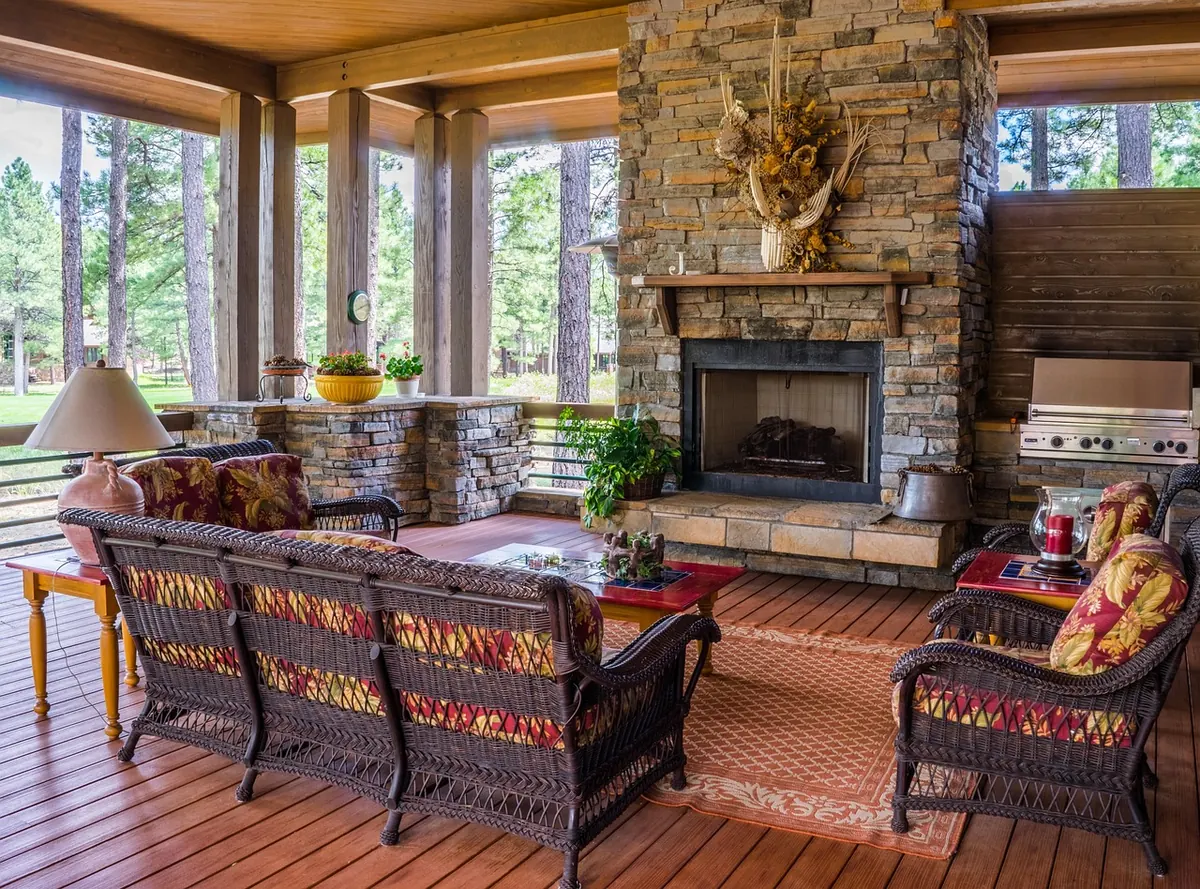
Resin has improved enormously. UV-stabilised high-density polyethylene woven over an aluminum frame can look convincingly like rattan and survive a decade of summers if you buy well. The cheap version — thin PVC strands over steel — goes brittle, fades to a dusty pink, and starts shedding within a few seasons.
When you're choosing, press the weave with a thumbnail; it should feel firm and springy, not hard and hollow. Check that the frame underneath is aluminum rather than steel, and look at how the strands are finished at the ends. Loose, unsecured tails are the first thing to unravel.
Wipe with mild detergent and a soft brush, rinse thoroughly, and let it dry before cushions go back on. Don't drag woven pieces across stone; the feet catch and the weave opens. If mildew appears, a dilute vinegar solution works on the plastic itself, but keep it away from metal frames and rinse well afterwards.
Fabric and Cushions: Where Salt Air Does the Most Damage
Textiles are the most vulnerable element on any terrace, and the enemy isn't rain. It's moisture that gets in and can't get out. A cushion soaked through and left flat on a bench will grow mildew along its lower seam within days, and that smell is very hard to remove.
Solution-dyed acrylic is the dependable choice for covers, because the colour runs through the fibre instead of sitting on the surface. For sling seats, PVC-coated mesh dries fast and shrugs off spray. Quick-dry foam cores, with open cells that let water pass through, are worth paying for.
- Choose removable covers with sturdy zips — washing is far easier than spot cleaning.
- Dry cushions on edge, not flat, and unzip them so air moves through the core.
- Wash with mild soap and cool water; skip fabric softener, which coats the fibres and reduces water repellency.
- Store only when bone dry. A breathable cover is better than a plastic tarp, which traps condensation underneath.
Clean before mildew appears rather than after. Dust and pollen are food for mould, and a brisk brush-down once a week does more than any specialist product. Always follow the care label for anything you're unsure about, and test any cleaning solution on a hidden seam first.
A Seasonal Routine That Fits Real Life
Long-term care isn't a project, it's a rhythm. Five minutes a week and an hour twice a year keeps coastal furniture in good shape far longer than occasional deep cleaning.
- Weekly: rinse frames and table tops with fresh water, brush sand out of cushion seams, wipe down arms where hands and sunscreen leave residue.
- Monthly: tighten bolts, check for coating chips and touch them in, look under seat frames for standing water or leaf litter.
- Before any storm: move light pieces inside or stack and strap them, take cushions in, and lower parasols.
- End of season: wash everything properly, dry it in the sun, treat teak if you oil it, and store cushions somewhere dry with airflow rather than sealed in a shed.
Buy for the Fifth Summer, Not the First
Before you commit, ask where each piece will actually live. A spot under a pergola with morning sun only is a gentler home than a west-facing deck that takes spray in winter. Think about weight, because you'll be the one moving it. Measure your storage honestly, since a cushion that has to be carried up two flights will end up left out in the rain.
Then buy a little less than you think you need. Four well-made chairs that still look good in five years will serve a terrace better than eight that need replacing in two. Rinse often, dry everything properly, and let the salt air do its worst to something that was built to take it.
Photo: rhyslud / Pixabay
Related Articles